Showing posts with label Denmark. Show all posts

Saturday, 19 December 2020

Julekage (Danish Christmas Fruit Loaf) with candied pineapple

The Cooking of Scandinavia, Foods of the World Series by Dale Brown and the Editors of Time-Life Books, photographed by Richard Meek 1969 Netherland
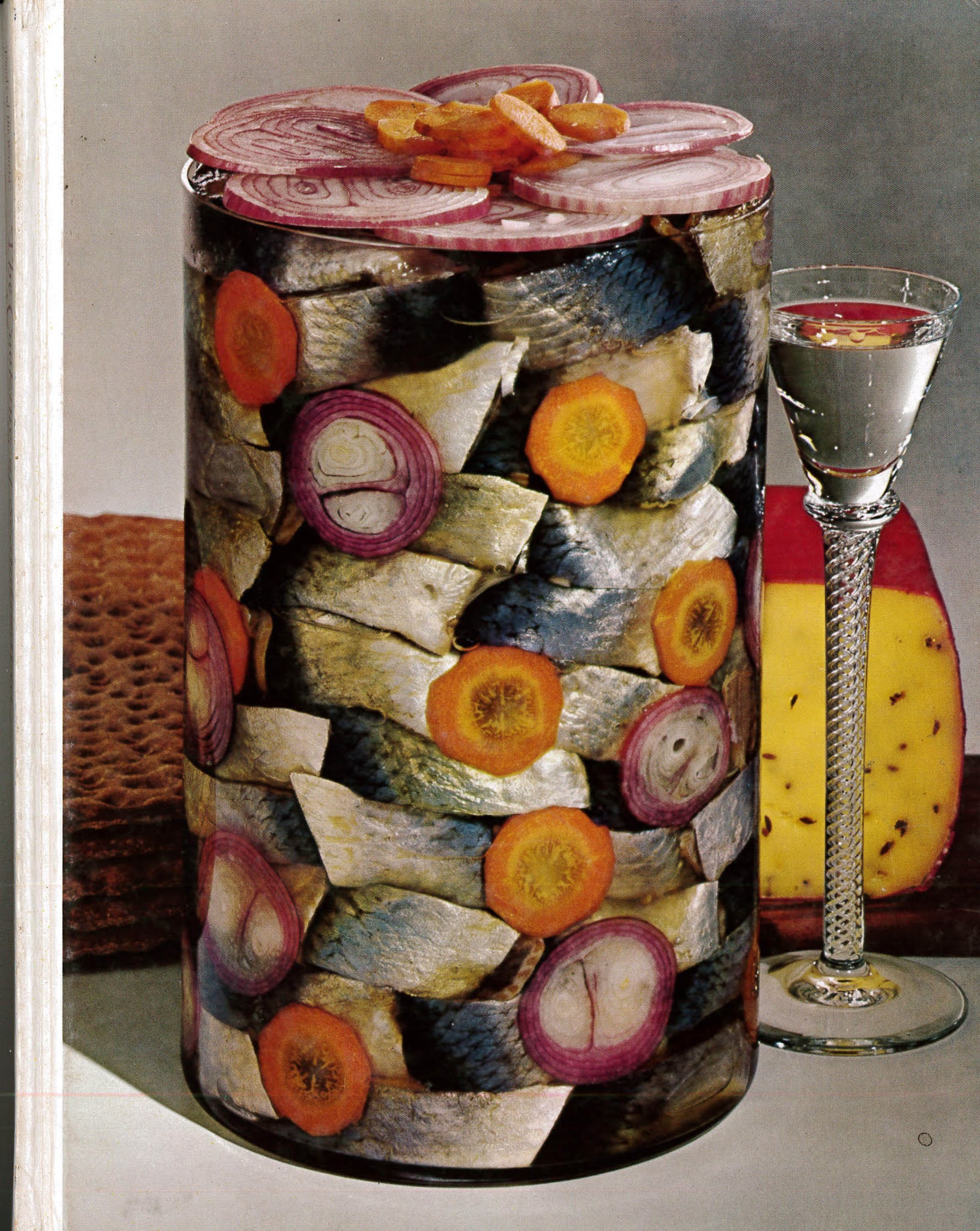

The cover of the book - no Julekage there ...


This is Julekage.

Julekage (Danish Christmas Fruit Loaf)

To make 1 large loaf: 1oz (28g) active dry or compressed yeast; 2oz (4 tblspn) castor sugar; 1/5 pint, 4oz (236ml) lukewarm milk; 1 saltspoon salt; 2 saltspoons vanilla; 2 salt spoons grated lemon rind; 2 eggs, lightly beaten; 2 saltspoons grated cardamom; ¾ to 1 lb (3 cups) sifted flour; ¾ cup mixed candied fruits (lemon, orange, cherry, pineapple) I used candied pineapple, mango and ginger; 1 tblsp flour; 1/4lb (125g) unsalted butter, softened

Sprinkle the yeast and 1 tblsp of the sugar over the lukewarm milk. Let the mixture stand in the cup for 2 to 3 minutes, then stir gently to dissolve them. Set in a warm place, perhaps in an unlighted oven. When the yeast begins to bubble in about 8 to 10 minutes, stir it gently, and, with a rubber spatula, transfer it to a large mixing bowl.

Stir in the salt, vanilla, lemon rind, eggs, cardamom and the remaining sugar. Then add ¾ lb (3 cups) of sifted flour, a little at a time, stirring it first and then kneading it with your hands until the dough becomes firm enough to be formed into a ball.

Shake the candied fruits in a small paper bag with 1 tblpsn of flour. (The flour will prevent the fruits from sticking together and enable them to disperse evenly throughout the dough). Now the add the fruits and the softened butter to the dough and knead for about 10 minutes, adding more flour if necessary, to make the dough medium soft. The finished dough should be shiny and elastic, and its surface blistered. Shape into a ball and place in a large buttered bowl. Dust the top lightly with flour, cover with a kitchen towel and set in a warm, draught-free spot (again, an unlighted oven is ideal). In 45 minutes to 1 hour the dough should double in bulk and leave a deep impression when two fingers are pressed into the centre.

After removing the dough, preheat the oven to 350°F (180°C). Punch the dough down with your fists and knead again quickly. Shape it into a fat loaf and put it into a lightly buttered 1 ½ quart loaf tin. Cover again with the towel and let the dough rise in a warm spot for 15-20 minutes until it is almost double in bulk.

Bake the julekage in the centre of the oven for 45 minutes. Remove the loaf from the tin and let cool on a cake rack. It will keep well for 2 to 3 weeks if wrapped in aluminium foil and refrigerated.

Tuesday, 6 August 2019

Sarah Bernhardt garnished with pineapple


It was so time consuming to make these delectable biscuits (for another blog I write eatwithanartist.wordpress.com) that I decided if I decorate them with edible gold dust and a piece of candied pineapple I could also include them in the Pineapple Princesses’ collection of recipes.

One of my parents’ nicknames for me as a child was “Sarah Bernhardt” I can’t imagine why 😊  
So I have a soft spot for this French actress, who I found out recently, was also a sculptor.

Sarah Bernhardt biscuits were created in 1911 by Johannes Steen, a Danish pastry chef as a tribute to Sarah Bernhardt when she visited Copenhagen for the publication of her memoirs in Danish, Anne


https://www.saveur.com/article/recipes/sarah-bernhardt-cookies-iceland/

Sarah Bernhardt Cookies

Makes about 54 Cookies

Ingredients: 8 oz. whole blanched almonds; 1 3⁄4 cups confectioners' sugar; 4 egg whites; 8 egg yolks; 1 cup granulated sugar; 2 cups unsalted butter, softened; 4 tbsp. cocoa powder; 16 oz. semi-sweet chocolate

Instructions:
1. Heat oven to 350°. Line two baking sheets with parchment paper; set aside. Process almonds in bowl of food processor until finely ground, 1 minute. Add confectioners' sugar and process for 2 minutes. Scrape bottom and insides of bowl to loosen clumped almond mixture, then continue to process until very finely ground, 3 minutes more; set aside.

2. Beat egg whites in the bowl of a standing mixer fitted with a whisk on medium-low speed until frothy, about 2 minutes. Increase speed to medium-high and beat until stiff, glossy peaks form, about 3 minutes more. Transfer whites to a large bowl. Fold in almond mixture a third time. Transfer to a large pastry bag fitted with a 1⁄2" plain pastry tip. Pipe 1" rounds about 1⁄2" apart onto baking sheets. Set aside for 10–12 minutes; bake 15–18 minutes, until stiff. Leave to cool.

3. Combine granulated sugar and 3⁄4 cups water in a 2-qt. saucepan over medium high; heat until a deep-fry thermometer reaches 242°, about 20 minutes. Meanwhile, whisk egg yolks in a medium bowl with a hand mixer; slowly add sugar syrup, then butter and cocoa powder. Mound 1 tbsp. to the bottom of buttercream onto each meringue. Freeze for 15 minutes. Pour enough water into a 4-quart saucepan that it reaches a depth of 1". Bring to a boil; reduce heat to low. Place chocolate in a medium bowl; set bowl over saucepan. Cook, stirring, until melted and smooth, about 5 minutes. Remove from heat; set aside. Dip cookies, buttercream side only, in chocolate to fully coat. Place meringue-side down on a baking sheet and refrigerate until chocolate has hardened.